

Installing solar panels can absolutely be a worthwhile investment, especially for those concerned about the price of electricity. Solar panels can allow you to generate your own free, renewable energy from the sun, helping to reduce your reliance on the grid. Many homeowners may not have also considered how solar panels can improve their property’s value and improve the environment.
However, solar panels may not be worthwhile for everyone. For example, you may not have adequate space on your property to install enough to power your home. Our article helps you make this decision, breaking down all the key factors, including their pros and cons, cost and the suitability of your home.
Pros and Cons of Solar Panels
Getting solar panels can be a great addition to your home for a variety of reasons. They can help lower your electricity bills and reduce your carbon footprint. However, they also have their drawbacks, making it important to consider the following pros and cons:
Pros of Solar Panels
- Lower electricity bills
Because electricity bills are continuing to rise in price, solar panels offer a solution where homeowners can generate their own free electricity. This makes you less reliant on the main electricity grid and allows you to cut down on your expensive energy bills. - Improve property value
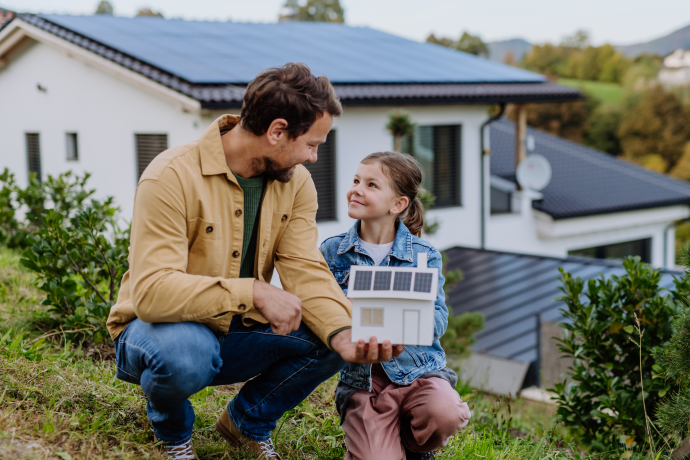
Investing in solar panels will also likely increase the value of your home. This is because solar energy is an attractive system that is highly valued by potential buyers. A recent Origin Energy survey found that 85% of Australians will be willing to spend more on a property when installed with solar, primarily due to the potential electricity bill savings. - Environmentally friendly
When you choose to go solar, you help to reduce your carbon footprint. Solar is a renewable energy source, meaning it’s generated naturally and is replenished more quickly than consumed. Because traditional electricity is usually generated through large-scale burning, which releases harmful greenhouse gases, solar energy produces little to no emissions and contributes to a cleaner, more sustainable planet. - Low maintenance
Once your solar panels have been safely installed, they require little to no maintenance. They can last at least a decade or two before their efficiency starts to decline, with a service recommended approximately every two years. This is unlike other renewable energy sources, such as wind or hydro, which typically experience more wear and tear. - Solar panels work in a variety of climates
Although solar panels work at their maximum in sunny conditions, they can still operate in a variety of conditions. Even during cloudy days, modern panels are designed to capture as much of the natural light as possible, even when you think there’s none around. Furthermore, because solar panels capture sunlight and not heat, your energy production won’t be negatively affected by cold.
Cons of Solar Panels
- Doesn’t work for every roof type
The success of your solar panels is largely dependent upon their direction, angle and orientation on your roof. However, not every roof is compatible with solar panels. For instance, you may have a house that has considerable shade from nearby buildings, which blocks out sunlight for considerable periods of the day. You may also have a much older roof that doesn’t have the structural integrity needed to support the weight of a complete solar panel system. However, many of your rooftop challenges can be worked around, so it’s best to contact your local installer or the team at Tasmanian Safer Solar (TSS), who can design a system to fit your home. - Buying solar panels can be expensive
One of the biggest challenges for many to invest in solar is the upfront cost. Solar panels can be expensive, with the average cost for a 6.6 kW system at between $6,000 – $10,000. This cost factors in all the system components, such as the panels, solar inverter, batteries and any labour costs. Although government rebates can help reduce this price, this is still a significant investment that requires a long-term commitment from buyers to deliver a return on investment (ROI). - Weather dependent
Although modern solar panels can extract as much sunlight as possible, they still won’t be as effective if there isn’t enough sunlight. For instance, at night, your solar panels won’t be able to produce electricity. Through the winter months, when the amount of sunlight is reduced with shorter days, you may have to rely more on electricity from the grid. These issues will vary depending upon your location, with Tasmanians particularly vulnerable to low sunlight.
How much do solar panels cost?
To make a decision on whether you should invest in solar panels, it’s vital to be aware of the costs. Within Tasmania, the average price of a residential solar panel installation is between $6,000 and $13,500 for panels up to 10 kW (kilowatt). The exact cost of your installation will depend on your system capacity, as well as your location and product quality. The following table displays the average costs for solar panels in Tasmania, reflecting both lower-end and higher-end prices:
| Capacity | Cost |
| 3 kW | $4,000 – $5,500 |
| 4 kW | $4,500 – $6,500 |
| 5 kW | $5,000 – $8,500 |
| 5.4 kW | $5,200 – $9,000 |
| 6 kW | $5,500 – $9,500 |
| 6.6 kW | $6,000 – $10,000 |
| 7 kW | $7,000 – $10,500 |
| 8 kW | $8,000 – $11,500 |
| 10 kW | $8,500 – $13,500 |
| 15 kW | $13,500 – $18,500 |
| 20 kW | $17,500 – $22,500 |
Government Rebates and Incentives
It should be noted that the above table hasn’t factored in any rebates. This is important to mention, because a huge reason to invest in solar panels is government rebates and incentives that aim to support your new purchase. Within Tasmania, residents have access to the following:
- Small-scale technology certificates (STCs)
Under the federal government’s Small-scale Renewable Energy Scheme (SRES), eligible Tasmanians can receive an upfront discount on the cost of their solar system. When you install panels, you create STCs, which have a specific value that can be redeemed by selling them. Your solar installer will include the value of this STC into the upfront cost of your panels, which can help to reduce their price by around 30%.
How Much Can You Save With Solar Panels?
One of the best ways to determine whether you should invest in solar panels is by finding out how much you can save. Your exact savings and payback period will depend upon the following factors:
- The size of your system (kW) – The size of your system is important to recognise because larger systems will typically generate more electricity and create higher savings. However, larger systems will cost more upfront.
- Energy consumption – It will be important to recognise how much energy you use. After you install solar panels, using as much free solar energy during the day can help maximise your savings.
- Average electricity bill ($) – This is key for determining your total savings, because it can show you how much you currently spend on electricity, and how much you could potentially save by switching to solar.
- Government incentives – Any government rebates or incentives will dramatically reduce the upfront cost of your solar panels. Small-scale Technology Certificates (STCs) can provide a 30% discount for eligible Tasmanians.
- Feed-in tariffs – Any excess solar energy that you create can be sold back to the grid for a feed-in tariff. Currently, within Tasmania, this rate is 8.782 cents per kWh.
To give you a snapshot of how much money you can save with solar panels, we have created the following table on the savings an average Tasmanian household should expect:
| Setup | Total System Cost (With Rebate Included) | 1 Year Savings | 5 Year Savings | 10 Year Savings | 20 Year Savings |
| 6.6 kW Solar Panel System | $5,940 | $1,238 | $5,859 | $11,942 | $24,825 |
The table above is an illustration of how much money you can save with solar panels. A 6.6kW solar system was chosen as this is the average size for a residential property. The rest of our assumptions are based on Tasmanian averages and include:
- 6.6 kW solar system (with rebate factored in): $5,940
- Cost of usage per kWh: 28c
- Daily supply charge: 153.42c
- Feed-in tariff per kWh: 9c
It is important to mention that we have calculated these savings using the above assumptions. Changing weather conditions, added maintenance costs, or the efficiency of your solar panels can all alter these results. Based on these savings, the total system cost would be paid back in just over 5 years. For a more accurate estimate based on your individual circumstances, please check out our calculator on the savings you could make when you switch to solar.
Should I wait to buy solar panels?
You might be in a position where you’re considering solar panels, but you’re also wondering whether it might be better to wait for prices to improve.
While predicting the future does come with a degree of uncertainty, the price for solar panels themselves is expected to decrease, although the curve is expected to flatten. Solar technology is also improving all the time, so by waiting that extra time, you can get access to more efficient panels that capture more of the sun’s rays.
However, the federal government’s Small-Scale Renewable Energy Scheme (SRES) is decreasing each year until it’s phased out by 2030. In turn, every year until 2030, the payments you can receive are expected to decrease, making now the best time to make the most of any rebates.
Furthermore, the longer you wait, the more you’ll have to pay for electricity. If you want to get solar panels, the best time to invest is now, so you can start cutting down on your energy bills right away.
Is My Home Suitable?
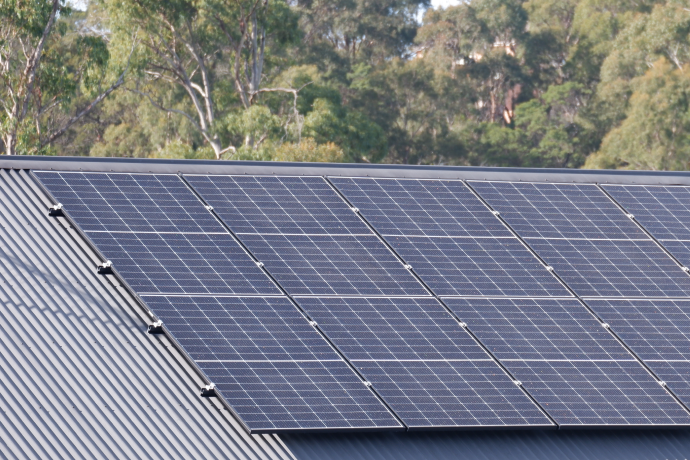
If you’re confident you can cover the cost of solar panels, the next step is to work out whether your home is actually suitable. While solar panels can operate anywhere in Australia, several factors will influence how well your system performs. These factors include the following:
- Location
Depending upon where you live, you may receive more or less sunlight, which will affect how much energy you can generate. For example, southern regions of Australia, such as Hobart, will receive less average daily sunlight than a northern region like Darwin. Although Tasmanians receive only an average of 4 to 7 hours of sunlight a day, and production is lower than in sunnier parts of Australia, this is still enough sunshine to make solar panels worthwhile. - Roof space
Most freestanding homes should have enough roof space to support the right number of panels that your home needs. Certain factors may reduce the usable roof area, such as any heavily shaded sections or roofs with an unusual slope. As a guide, an average 6.6 kW system usually needs 18 – 24 panels, and between 25 to 40 square meters of roof space. If you’re unsure about the suitability of your roof, your best course of action should be to reach out to the experts at TSS for advice. - Roof orientation
Because Australia is south of the equator, your panels will receive the most amount of sunlight when installed on a tilted, north-facing roof. Therefore, if your home doesn’t have a north-facing roof, your home may not be as suitable for solar panels. This doesn’t mean your solar panels still can’t be a good investment. Positioning your panels east or west can still be beneficial because your panels create more power during the morning and afternoon. - Shading
Consider how much of your roof is impacted by shade cast onto it by nearby trees and any surrounding structures, such as a nearby building or rooftop antenna. Because shade blocks out sunlight, this can dramatically reduce your solar system production, so we recommend minimising this as much as possible.
When are solar panels worth it?
For most Tasmanian homeowners, solar panels can be a great, worthwhile investment due to the various benefits of solar energy. If you find yourself spending more and more money on your electricity bills, solar panels can be a smart way to save. Therefore, if you’re a household with high power consumption, especially during daylight hours, solar panels can be incredibly worthwhile because you will experience greater savings.
You may also be looking at selling your property and trying to find ways to increase the value of your home for prospective buyers. Although solar panels are generally a long-term investment that can take years before they’re eventually paid off, people looking to buy solar panels purely as a property tool should assess their payback period carefully.
Panels can also be worthwhile due to their reasonable payback periods. Particularly, if you’re a household that’s planning to use as much of your solar energy as possible during the day, you can expect to pay back the cost in 5 years or less.
Evidently, if you live in a region with low sunlight, solar panels may not be as worthwhile. Although we are lucky in Australia to have access to some of the most plentiful sunlight anywhere on earth. As we unpacked in our section on payback periods, even within Tasmania, which has some of the lowest average sunlight in Australia, you can still expect to pay back your system in
Finally, solar panels are a great generator of clean, renewable energy. If you’re a household looking for ways to cut back its carbon footprint, solar panels can reduce fossil fuel use to help you live more sustainably.
When are Solar Panels Not Worth It?
While solar energy can be a great way to cut down on electricity costs, it’s not necessarily a one-size-fits-all solution that every Tasmanian can install. If any of the following factors apply to you, we recommend giving the team at TSS a call to discuss whether solar panels are truly worth it:
- Future renovations or moving
If you’re planning on undergoing major renovations soon, or you’re planning to move house completely, installing solar panels may not make financial sense. This is because it usually takes approximately 5 years for a system to pay for itself. You will likely not be able to recoup the cost through energy savings if you’re planning to move in the short term. Furthermore, your solar panels may have to be removed and reinstalled for any renovations or extensions, so it may be wise to hold off until after they are completed. - Heritage overlay restrictions
In some parts of Australia, heritage overlay restrictions may impact whether or not you can install solar panels. For example, many homes within inner-city suburbs may have heritage restrictions that ban the installation of solar panels on street-facing roofs. If you live within an area impacted by heritage overlays, please reach out to your local council to check what restrictions apply to you. - Electricity rates are low
The primary way that solar panels save you money is by replacing your electricity costs with free electricity from the sun. However, if your electricity is already cheap, you may not be able to pay back the initial investment from savings as quickly. - Your roof isn’t suitable
If your rooftop doesn’t get at least 4-5 hours of direct sunlight a day, rooftop solar might not be the right choice for you. Heavy shade, south-facing orientations or if your roof is too small, your solar savings may be considerably lower than you would like. Your solar installer may consider alternative solutions, such as ground-mounted solar panels; however, this will depend on how much backyard space you have.
How do I find a good solar installer?
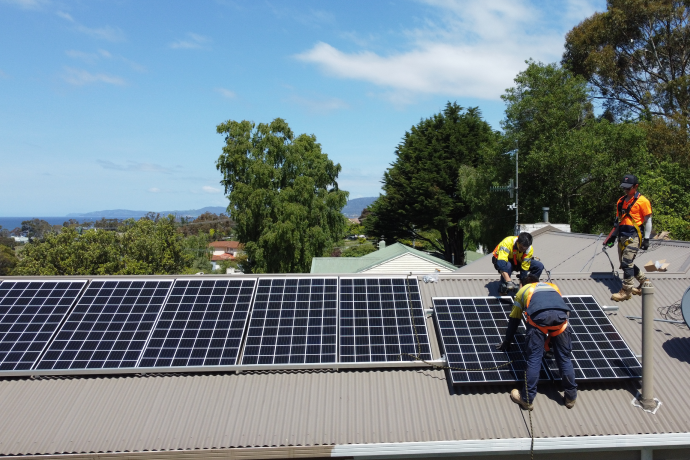
Once you decide that solar panels are worth investing in, it’s important to find the right installer.
Because solar is an expensive purchase, you’ll want to ensure you choose the best company possible for the job. A good installer can deliver your new solar panels safely, in a way that maximises your available roof space to deliver strong energy output, while navigating any local regulations and government rebates.
On the other hand, if you choose the wrong installer, you risk your panel not working as fully intended. They may not have assessed your roof correctly to maximise efficiency, or if they are not qualified, your manufacturer’s warranty may be voided. You can find the right solar installer for you by browsing companies near you and always checking reviews online to gauge customer opinions. We also recommend verifying that they are fully accredited by Solar Accreditation Australia (SAA).
The experts at Tasmanian Safer Solar (TSS) are SAA accredited, and can ensure every installation is safe, reliable and fully compliant with any Tasmanian regulations. As a local company, we understand the challenges unique to Tasmania and can help guide you through each step of the process. For more information, please reach out to the team here.

 1300 655 808