


When you choose to install solar, you will have to make a decision between three system types: on-grid, off-grid and hybrid. To ensure you make a smart investment, it’s helpful to be aware of what makes each system unique.
An on-grid system producing solar energy will remain connected to the public electricity grid. As the name suggests, an off-grid system is completely disconnected from the grid, meaning you are entirely responsible for generating your own energy. A hybrid system combines the features of both. Read on to learn more about each system’s unique characteristics, benefits and drawbacks, to determine the best setup for your home.
Key Components of a Solar System
Solar systems are a simple, yet technically advanced, assembly of components that work together to deliver electricity. Every component plays an important role in converting sunlight to power your home. The three most important components are:
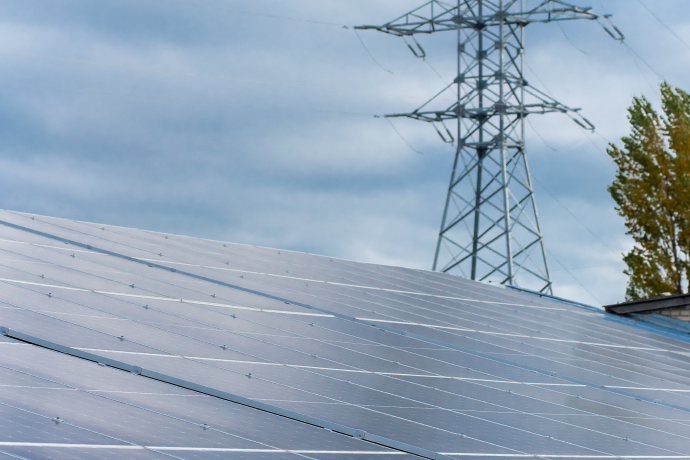
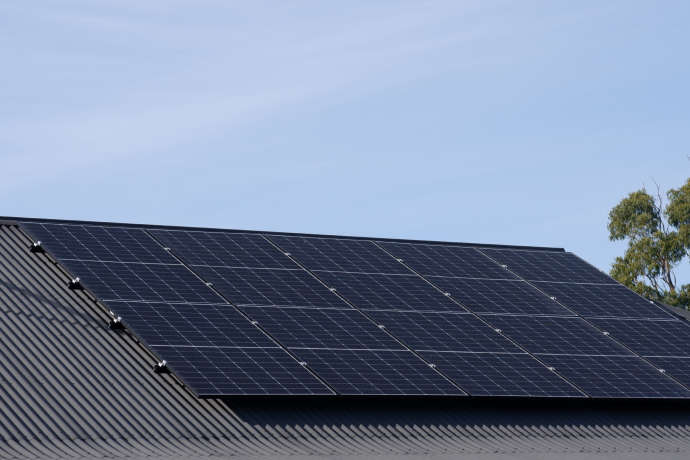
- Solar panels – These are the panels that are usually placed on a household’s roof to absorb sunlight. Solar panels are made up of many silicon-based photovoltaic (PV) cells, which collect sunlight and generate direct current (DC) electricity. This DC energy is then sent from your panels to your solar inverter.
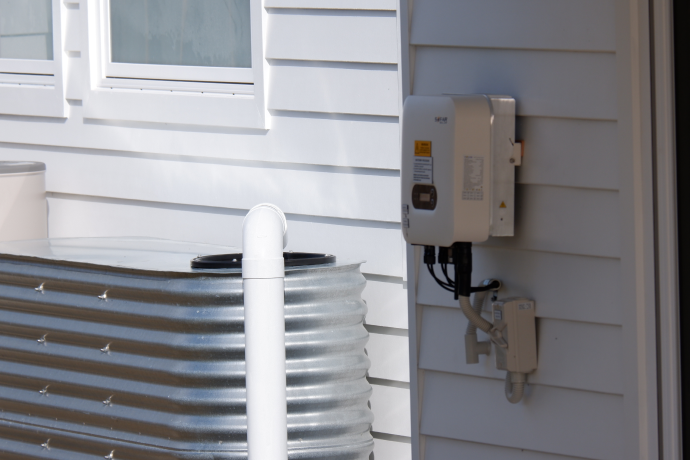
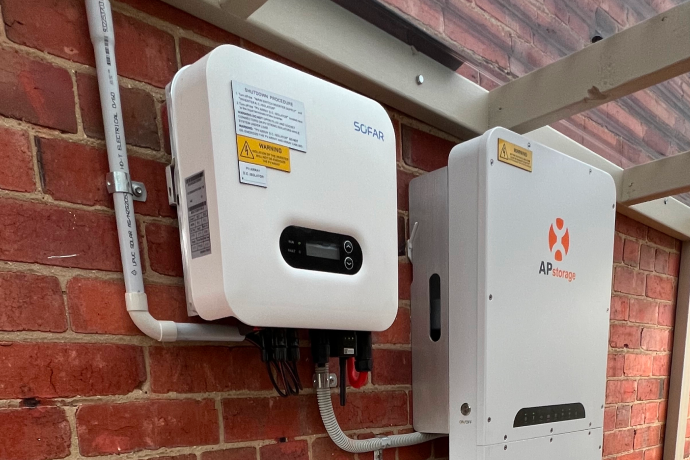
- Solar inverters – Because our homes run on alternating current (AC) electricity, a solar inverter is the device needed to convert the DC electricity from your panels into AC. Once it passes through your solar inverter, your solar energy is safely sent to your home’s electricity switchboard and then to your appliances. Most commonly, solar panels are connected in a series to a single string inverter. However, in microinverter systems, each panel has its own microinverter, which converts from DC to AC.
- Solar batteries – These are storage devices for any excess solar energy that isn’t needed for your home. Batteries are increasing in popularity as homeowners are looking for more ways to use all of their solar energy, particularly at night or during overcast days when sunlight is low. While these are an optional component for on-grid systems, they are an essential part of off-grid solar systems, helping to provide a continuous supply of solar energy.
What Is an On-Grid Solar System?
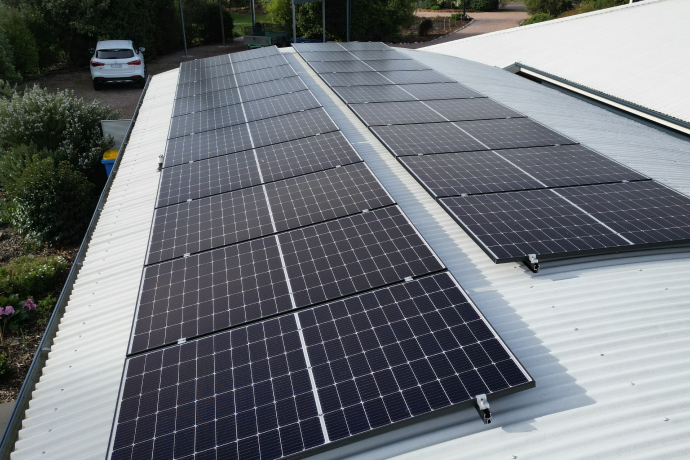
An on-grid system produces solar energy while also being connected to the public electricity grid. These solar systems are by far the most common within Australia, as they can operate without the need for solar batteries. When connected to the grid, your home can use both the solar energy produced by your panels, while also having access to electricity from the grid whenever necessary. Any excess solar energy that you generate can be sent back to the grid, for which you can get paid a feed-in tariff or a bill credit to offset future electricity costs.
On-grid systems are hugely popular because they are the cheapest entryway into solar energy, requiring fewer components than other system types to run. Furthermore, because you remain connected to the grid, this system is ideal for households worried that their solar panels may not generate enough electricity, or during periods with little or no sunlight.
On-Grid Solar System Pros and Cons
To help you further understand the characteristics of an on-grid solar system, we have compiled a list of its strengths and weaknesses. These typically include the following:
Pros
- Low upfront costs – This is the most cost-effective solar system, with the lowest upfront costs. Because you are connected to the electricity grid, your backup energy is covered, and you won’t need to invest in an expensive battery.
- Net metering and net billing participation – If homeowners are generating more solar energy than they need, the excess can be sent back to the grid. In exchange, you can receive a feed-in tariff payment, which is usually paid as a rate per kilowatt-hour (kWh) of electricity exported. Your utility provider will apply this credit to your electricity bill to offset energy costs over time. Within Tasmania, residents can be credited a minimum rate of 8.935 cents per kWh for their unused energy.
- Access to grid power – Because your solar energy works hand in hand with electricity from the grid, you’ll never have to worry about not getting enough sunlight or producing enough energy. You’ll get all the savings and benefits of using a renewable energy source, without having to dramatically change your lifestyle to conserve energy.
Cons
- No power during outages without a battery present – Because on-grid systems are usually battery-less, they won’t be able to generate electricity or power your home during a blackout. For safety reasons, on-grid systems must shut down completely during a power outage to stop any excess electricity from flowing back into the grid while it’s being repaired.
- Dependence on the grid – While having access to the grid can certainly be a benefit by taking the stress out of your own energy production, it also means you remain dependent on energy retailers. As a result, you’re still affected by energy price increases, and because you’re not completely self-sufficient, you won’t save as much each year as you would by going completely off-grid.
What Is an Off-Grid Solar System?
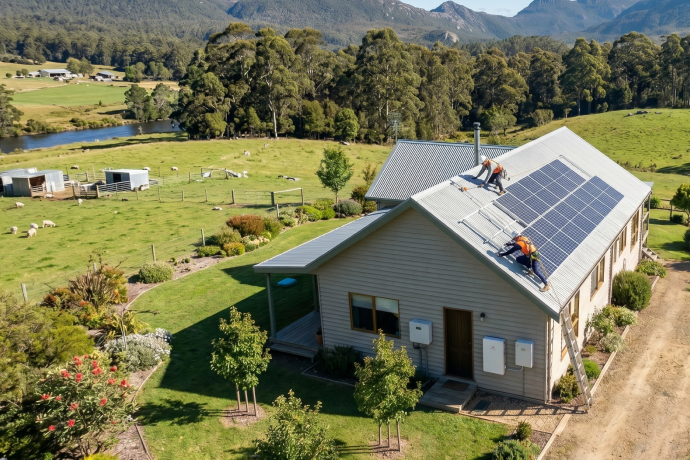
As the name suggests, an off-grid solar system is not connected to the main grid. This means you are completely self-sufficient, with your home reliant on the energy generated from your solar system.
To keep your home running off-grid, you will need a significant amount of battery storage to store as much backup energy as possible. Because there’s no grid connection to rely on, you’ll likely need an additional backup power source, such as a petrol-powered generator, to ensure your home appliances keep running during an extended period of low sunlight. While off-grid solar is not nearly as popular as an off-grid system, it has grown in popularity recently as homeowners look for more ways to save on electricity bills.
Off-Grid Solar System Pros and Cons
Pros
- Energy independence – Households choose these systems to achieve complete energy independence. This means saying goodbye to any electricity bills, as you’re generating completely free energy from the sun. Particularly as electricity prices continue to rise, you can make substantial savings every year to offset your initial investment. Being disconnected from the grid also means your home can continue operating during a blackout, with your battery storage keeping you self-sufficient.
- Suitable for rural areas – Not every home is in a suitable location to connect to the grid. Particularly those in rural or remote areas, you may be concerned about your ability to power your home. Switching to an off-grid solar system can be highly beneficial for those in these regions, providing a practical alternative to traditional electricity and making your property self-sufficient with purely solar power.
- Positive environmental impact – Fully disconnecting from the grid means you are helping to reduce your carbon footprint. Traditional electricity is created by burning harmful fossil fuels that contribute to air pollution. By relying completely on renewable energy, you help curb the demand for grid-connected electricity and support a sustainable future.
Cons
- Higher upfront costs – Installing a system powerful enough to run your home will be pricey. This is because you’ll need to purchase a solar battery, which must be large enough to ensure you have plenty of excess energy available to support your home. A solar battery can account for 30–40% of the total cost, making it more expensive than other systems where a battery is optional.
- No backup grid support – Being completely disconnected from the grid can be difficult during periods when solar energy is harder to generate. For example, a region may experience persistent cloudy days, which increases the chance of you draining all of your available energy. Unlike an on-grid system, you can’t just purchase electricity from the grid. This forces households to think more about their daily habits to make sure they use their available power carefully. Making wholesale changes to your energy use can be challenging and may not be for everyone.
What is a Hybrid System?
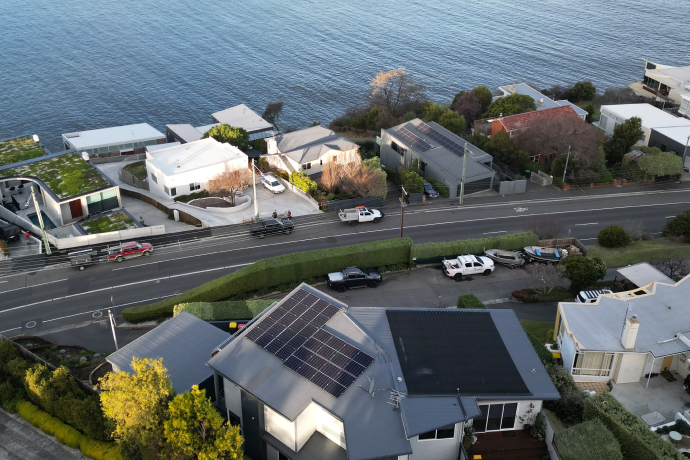
A hybrid system combines the best of both worlds. This is a system in which you are still connected to the grid, while also using solar battery storage to store excess energy.
This means you can access all of the benefits of having a solar battery, with the peace of mind that you can still receive grid electricity as a backup. Staying connected to the grid also means you can send back any excess energy for when your batteries are full for credit. Particularly as the cost of solar batteries continues to decrease, hybrid systems are becoming more viable for those who are already connected to the grid to also take advantage of energy storage.
Hybrid System Pros and Cons
Pros
- Backup power – When you add a solar battery, you can unlock all of the benefits of backup power. For instance, you can reduce your reliance on the grid by supplying solar energy during periods of the day when electricity is most expensive. Battery storage also keeps your home appliances running during a blackout, making it a viable system for those living in regions with persistent outages.
- Operational versatility – Because you’re still connected to the grid, a hybrid system gives homeowners the freedom to switch between the benefits of both modes. With a battery, you can make better use of your solar energy without having to change your everyday lifestyle. It brings you closer to energy independence, with the peace of mind that your home will always have reliable power.
- Storage capacity flexibility – Because you aren’t fully dependent on a solar battery in the same way as you are in an off-grid setup, you have the freedom to invest in a smaller, affordable battery. This helps to reduce the upfront costs.
Cons
- Higher upfront costs – Although not as substantial as an off-grid system, adding a solar battery still means you’ll be paying more than if you were purely on-grid. While the long-term savings on your energy bills can make this worthwhile, the upfront costs are a significant investment that should be carefully considered.
How To Pick the Best Solar System For You
To choose the right system for you, it’s important to consider your own energy needs and budget to make an informed decision.
An on-grid system will likely be the best financial choice for homeowners because of their lower upfront cost and simple design, offering a great return on investment. Because you won’t need to factor in a solar battery, annual maintenance costs will also be much lower.
A hybrid solar system may also be viable under different circumstances. For instance, if you live in an area that suffers from frequent blackouts, having a solar battery can keep your home appliances running. If you’re someone who really values their own energy independence and wants to maximise the amount of solar they produce, a hybrid system could be a smarter financial choice than going fully off-grid.
For most homeowners, an off-grid setup really isn’t the most practical option. Although they can deliver complete energy independence, they require the most substantial investment with the addition of battery storage. These systems are only suited for those who are focused on achieving complete energy independence or live in remote locations where going off-grid is suitable.
Ultimately, if you are still unsure about which system is right for you, we recommend consulting with your local installer or the experts at Tasmanian Safer Solar (TSS). We have all the skills and experience needed to find the right system for your home, and to help you make the best transition to solar.

 1300 655 808