

When discussing a solar system, many homeowners may overlook the role of a solar inverter. They are an essential component for the success of a solar system, responsible for converting direct current (DC) from the sun into usable alternating current (AC) for your home. However, not all solar inverters operate the same, making it critical to understand the different types of solar inverters and which one is right for your home.
Most modern solar systems will use either a string inverter or a microinverter. String inverters refer to a series of solar panels wired together in a “string” configuration, where all energy flows into a central inverter. On the other hand, microinverters are attached directly to each solar panel, allowing them to independently convert from DC to AC at the panel level.
Homeowners may also consider less commonly used devices, such as a hybrid inverter that works in conjunction with a solar battery. Power optimisers are another key technology that can work in tandem with a string inverter, helping to improve the output of each panel.
Understanding the Role of Solar Inverters
A solar inverter is often called the brain of your solar system. They are devices responsible for converting the DC energy generated by your solar panels into AC, which is the form of electricity used in homes and businesses. Without an inverter, all the energy your panels generate would be unusable for your home appliances.
However, modern inverters can do more than just convert energy. They can monitor energy production, alongside safety mechanisms to quickly shut down the system if any electrical faults occur. They are also directly connected to the grid, helping to ensure any excess solar energy is exported.
Solar inverters essentially act as the central control centre for your entire solar system, allowing everything to operate smoothly so your home receives usable electricity.
Types of Solar Inverter
Microinverters
How it works
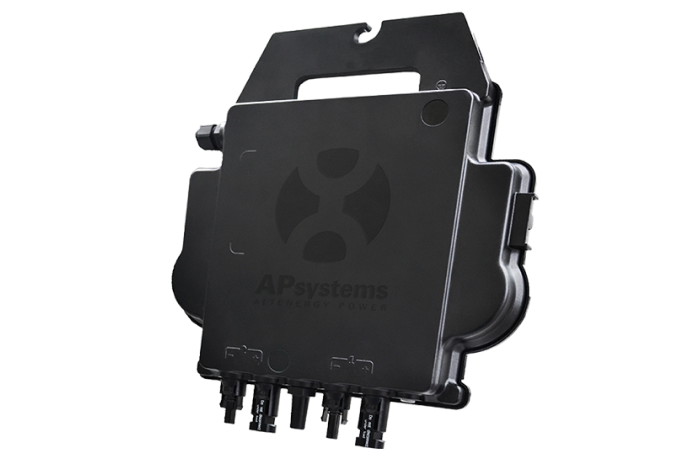
Microinverters are small devices that are attached to the underside of each solar panel. These devices operate independently from one another and can convert DC energy to AC right at the panel. Once this conversion is complete, the microinverters send the AC energy from each solar panel to the main electrical circuit for your home.
Pros
- Each panel works independently: Because microinverters perform the energy conversion at the panel level, each panel operates independently. If one panel fails or is affected by shade, you would only lose the output of the individual panel, rather than significantly reducing the performance of the entire system.
- System flexibility: If you decide to install more solar panels in the future, microinverters will make this expansion much easier. This is because each panel is independent, meaning you can add more one by one, without having to replace a central inverter.
- Monitor individual panel performance: Microinverters take advantage of modern technology, with advanced wifi connectivity and monitoring features. Furthermore, because each solar panel is fitted with a microinverter, you can determine how much energy is being generated from each panel for precise monitoring.
- Lifespan: Microinverters are renowned for their impressive durability, with a lifespan of between 20 and 25 years. This can be more than twice as long as the standard lifespan for a string inverter.
Cons
- More expensive: The major downside to a microinverter system is the extra cost. You should expect a microinverter system to cost approximately 20-30% more than a string inverter.
- More difficult maintenance: Because microinverters are attached directly to your solar panels and positioned on your roof, this can make carrying out maintenance checks more complex. Particularly if a microinverter needs to be replaced, a solar professional typically needs to access the roof and physically remove the affected panel to replace the unit.
String Inverters
How it works
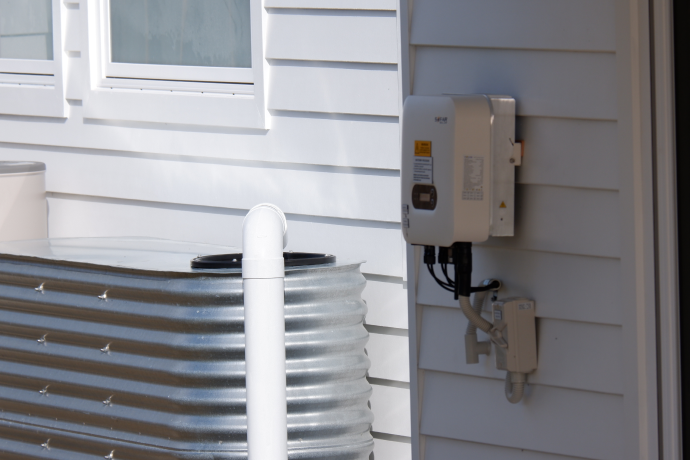
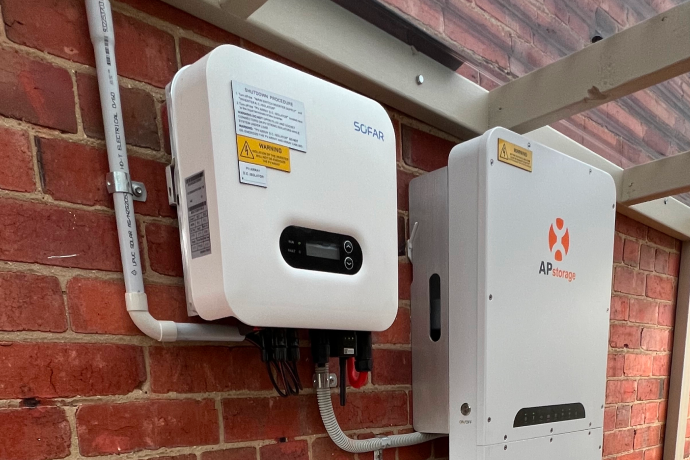
The oldest and most popular inverter technology, in which a single inverter is responsible for converting the energy of the entire system. In this setup, all panels are wired together in a row, or string, which is then connected to a single inverter that’s typically located on a wall near the main switchboard.
Pros
- Low cost: Especially when compared to microinverters, the affordability of string inverters is one of their biggest strengths. Installing one string inverter will cost comparatively less than adding multiple microinverters to cover the same size.
- Straight-forward installation: String inverters have few components and wiring, which makes installation relatively straightforward. With all panels connected to just a single central inverter, there are fewer connection points for installers to manage.
- Easy to troubleshoot: Because of the central inverter design, maintenance and troubleshooting are much easier as all issues can be traced back to the central unit. Furthermore, because the inverter is installed at ground level rather than on the roof like a microinverter, it helps to make maintenance safer for installers.
Cons
- Underperforming panels significantly lower system output: Because all the solar panels in a traditional string inverter system are wired together in series, if one panel is underperforming, it affects the output of the entire system. For example, if one panel is heavily shaded, it reduces the output of that entire string, even if the other panels are experiencing perfect sunlight.
- Short lifespan: Because of the high electrical load that a single inverter is subjected to, it has a relatively low life expectancy of between 10 and 15 years.
Hybrid inverter
How it works
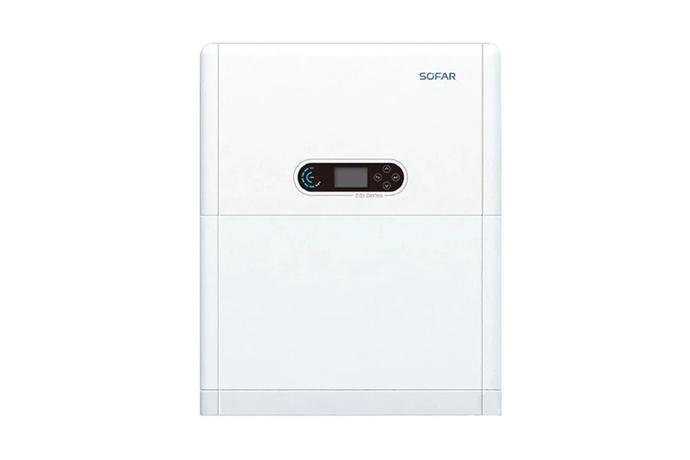
With solar batteries growing in popularity, hybrid inverters are “multi-mode inverters” that can convert DC energy into AC for your home, while also directing any excess DC energy to your solar battery. They are clever devices that can track how much storage your battery has remaining and manage when energy should be sent to your home, or back to the grid once your battery is fully charged.
Pros
Future proof: These inverters are designed to easily integrate with battery storage, either right away or at a later date. Therefore, even if you cannot afford a solar battery now, installing a hybrid inverter can set you up for seamless integration in the future.
- Energy management: A hybrid inverter allows for seamless integration with solar battery storage, helping to manage energy between your panels, battery and the grid at once. This also ensures energy is always directed to the right place, allowing you to rely less on the grid and maximise your savings.
Cons
- Cost: Their cost is typically higher than traditional string inverters or microinverters because they are more complex and require advanced technology to manage both solar panels and battery storage simultaneously.
- Complex installation: When integrating with battery storage, a hybrid inverter will typically require greater expertise for installation and configuration. It also contains more internal components than other inverter types, because it combines both solar and battery management into one unit.
Power Optimisers
How it works
Although not technically an inverter, power optimisers are a crucial component, often paired with inverters to solve common performance issues. Similar to a microinverter, they are placed under each panel to monitor the voltage and current, ensuring the maximum possible energy is generated, even if the other panels are shaded or dirty. These devices can be paired successfully with a string inverter setup, helping to make the most of each panel and reduce the impacts of shading, before the DC energy is sent to a central inverter.
Pros
- Increased performance: Working in a similar way to microinverters, power optimisers help to improve the performance of your total solar system by optimising each panel’s output. This is particularly beneficial when affected by partial shade or panel failure, reducing the impact on the rest of the system.
Monitor individual panels: Power optimisers allow for real-time monitoring at each panel, to make identifying any faults or dips in performance much easier.
Cheaper than a microinverter system
Although they will increase the cost of a string inverter setup, they are typically more affordable than installing a full microinverter system.
Cons
More complex installation: Adding power optimisers to your panels naturally increases the complexity of your solar system with potentially twice as many new connections. This can increase the number of potential failure points and may require more maintenance.
Single point of failure: Despite their ability to boost the production of each panel individually, power optimisers are still limited to a central inverter unit. Unlike a microinverter setup, this creates a single point of failure where the entire system goes down if the main inverter fails.
What Type of Inverter Should I Choose?
To help you determine the right inverter type for your home, please refer to the following key factors:
Roof design / Shading impact
The design of your roof and how much shading it receives should be essential factors in selecting the right inverter. If you have a roof that’s north-facing, with no obstructions or shade, then a string inverter should be sufficient. However, if you have a roof with a more complex design, with multiple angles that are facing different directions, microinverters or power optimisers will be much better suited. Especially when panels are affected by shade, these inverters can optimise the performance of each panel.
Monitoring capabilities
Modern inverters, regardless of their type, will have some form of monitoring capabilities. Microinverters will have access to the most sophisticated monitoring data because they can track the output of each panel individually. Monitoring will be key for the success of your system, helping to identify performance issues early, so ensure your inverter type is fitted with the appropriate hardware.
Interaction with the grid
The ways in which your solar inverter interacts with the grid should also be taken into account. Both string and microinverters are traditionally grid-tied, meaning they operate in parallel with the grid, feeding back any excess energy. However, for safety reasons, this also means they are designed to shut down when the grid goes down.
On the other hand, while hybrid inverters can also export excess energy, they can also isolate themselves from the grid during a power outage and switch to a solar battery to continue supplying energy.
Cost
For budget-conscious households, a stringer inverter will be the most affordable choice, with a basic installation and the lowest upfront cost for equipment. Comparatively, microinverters are much more costly, and can be around 20-30% more expensive than a string inverter system. If you’re already investing in solar batteries, a hybrid inverter makes economic sense, with an initial cost that sits between a string inverter and a microinverter.
Lifespan / expected warranty
You’ll likely want an inverter with a strong life expectancy to save on costly replacements down the line. The following is a breakdown of the typical lifespan of each inverter:
- Microinverter: 20 to 25 years
- String inverter: 10 to 15 years
- Hybrid inverter: 10 to 15 years
Although string and hybrid inverters have a shorter lifespan, they are more affordable to buy. Therefore, when considering the lifespan of each, it’s also important to factor in their initial cost and likely payback period.
Battery compatibility
If you are considering the benefits of a solar battery, make sure you factor this into your decision. By installing a hybrid inverter, you can avoid any costly headaches down the road, with a system that’s fully prepared for a battery.
By understanding the unique characteristics of each solar inverter type, including their pros and cons, you can feel better prepared to select the right device. It’s also essential to unpack various selection factors, such as cost, efficiency and expected lifespan, to make the right decision. If you need further assistance with installing a solar system and choosing an inverter, please contact the team at Tasmanian Safer Solar (TSS).
 1300 655 808