



As electricity prices increase, Tasmanians are looking for more ways to save with solar. Net metering is a great way to offset your expensive energy bills. This is a unique program in which you are paid for any excess solar energy your home exports back to the electricity grid.
Net metering can benefit Tasmanians by improving their savings and giving them an incentive to create more renewable energy to help them and the environment. Although you will need to remain connected to the grid, this makes it unsuitable for those wanting to go off-grid. Read on to learn more about net metering within our article, including the process for applying and installing in Tasmania.

What is Net Metering?
Net metering is a billing arrangement that allows homeowners with solar panels to send any excess energy they generate back to the grid in exchange for a credit.
A net meter is central to this process. It measures the electricity you draw from the grid, as well as any electricity you send back. When the meter detects that you’re generating more energy than you’re using, it records the excess, and you are credited for the amount exported. Exact credit amounts for sending energy back to the grid will vary widely depending on your location, but will usually be applied to your energy bill by your utility retailer.
Depending upon the time of year, households may produce more or less energy than they need. For example, during the winter months, most homes use more electricity from the grid for heating, while in the summer, their panels may generate more solar energy than they need.
What is a Feed-in Tariff (FiT)
While net-metering is the process of exporting your excess energy back to the grid, a feed-in tariff is the payment you receive from the electricity retailer for the amount of energy you have exported. This is typically paid at a rate per kilowatt-hour (kWh) of energy and is usually applied to your electricity bill.
Feed-in tariff rates will vary significantly depending on your state. For example, in Tasmania, residents get paid a feed-in tariff for every kWh of electricity they export. Currently, Tasmanians can receive a minimum of 8.935 cents for every kWh.
Different Types Of Net Metering
Australians will typically come across the following three common types of net metering:
- Standard Net Metering – This is the most popular version of net metering, and the standard for modern installations. This is where you only export the unused or excess solar energy that you generate to the grid. Homeowners then receive a feed-in tariff for every kWh of energy they export.
- Gross Metering – An older version of net metering, in which you export all of the energy produced by your solar panels to the grid. In this agreement, it does not matter whether or not you are using the energy, with you being paid a feed-in tariff for the total production. Importantly, this system has been largely phased out and replaced by standard net metering for modern installations.
- Virtual Net Metering – For households that can’t physically install solar panels, you could choose to participate in virtual net metering. This is where residents can join a shared solar project, such as a solar farm, and receive a portion of the credits. This system can be a great option for renters or those living in an apartment complex who still want to benefit from solar.

Advantages Of Net Metering
With net metering, homeowners can access numerous benefits that are both financial and environmental. The following are some of the advantages that come with net metering:
- Lower Energy Bills – Arguably the biggest benefit of net metering is the potential savings you can accrue. By receiving solar credits and feed-in tariffs, these can be applied to your electricity bill to significantly reduce the amount you pay. These savings can quickly add up over time, significantly improving your return on investment (ROI) to make solar panel installations more attractive.
- Improves Property Value – Homes and businesses that have solar panels and working net meters installed are typically viewed as more attractive by potential buyers. This is because of their long-term potential for savings on electricity bills, as well as their environmental benefits.
- Reduces the Need for Solar Batteries – Without net metering, you will likely need to purchase a solar battery, which can be incredibly expensive and bulky to store. Net metering simplifies this by providing a straightforward way to use the grid to send excess energy.
- Minimises Your Carbon Footprint – Net metering encourages you to produce as much solar energy as you can to send the excess back for credit. By incentivising solar generation, this promotes the use of renewable energies and disincentivises our reliance on fossil fuels. Traditional electricity from the grid is created by burning harmful fossil fuels that contribute to air pollution, with solar energy helping to curb this demand for a more sustainable future.
Disadvantages of Net Metering?
While it certainly offers substantial benefits, it’s important to also consider some of the drawbacks. The disadvantages of net metering include the following:
- You must be connected to the grid – To benefit from net metering, you must be connected to the grid at all times. While this may seem like an obvious point, this can be a drawback for people who are looking to go completely off-grid or want complete energy independence. Even for those with hybrid systems and battery storage, it can be difficult to balance net metering with storing excess solar energy in your battery.
- Fluctuating Feed-in Tariffs – The feed-in tariffs you receive for net metering are not set in stone. They can be reduced over time, which can affect your ability to generate a solid return on investment. Particularly if you invested in net metering at a certain point and the feed-in tariffs later dropped, it can create a sense of unfairness that you’re receiving lower savings. For instance, in Tasmania, the 2025-26 minimum feed-in tariff rate is 1.7 % lower than the 2024-25 rate.
Alternatives to Net Metering
There are several alternatives to net metering, where you can still benefit from generating extra solar energy. These typically include the following:
- Net billing – Net billing is deceptively similar to net metering, and many homeowners often get the two confused. Like net metering, under a net billing arrangement, you send back any excess solar energy generated by your panels to the grid. The key difference lies in how you are paid. In net metering, you’re compensated at the retail rate, while in net billing, your excess energy is sold to the utility at a lower rate than what you pay to buy electricity, which encourages you to use as much of your solar energy on-site as possible.
- Battery Storage or Off-Grid – Although you can choose to send your excess solar energy back to the grid for credit, an alternative to net metering is adding a battery to store this energy that would be otherwise exported. This is a great way to reduce your reliance on the grid, allowing you to store energy for later use when your panels aren’t producing power. You can also go one step further and install an off-grid system. This is where you are completely disconnected from the grid, and all of your excess energy is stored for powering your home.
- Virtual Power Plants (VPP) – Another way you can benefit from your excess solar energy is by joining a virtual power plant (VPP). This refers to a network of connected solar batteries, where small amounts of individually stored energy are shared to produce a larger collective supply that helps reduce demand on the grid. Those who participate in the VPP can earn bill credits, offering another way to make money from excess solar energy.
Are Tasmanians Eligible for Net Metering?
Yes, Tasmanians, like most other regions of Australia, are eligible for net metering. When Tasmanians send back their excess solar energy, they can be compensated with a minimum feed-in tariff rate of 8.935 cents per kWh.
How to Get Net Metering in Tasmania
You’ll want to ensure your net metering system is installed correctly, so you can take advantage of all the potential savings. The process for installing net metering is relatively simple and typically involves the following steps:
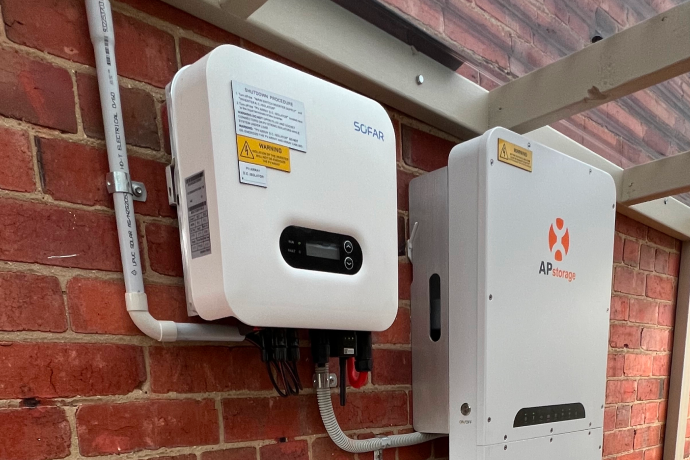
- Install a solar system – The first step to getting net metering is having a solar system installed, including panels and an inverter. This should only be done by a reputable installer who is accredited by the Clean Energy Council (CEC), such as the team at Tasmanian Safer Solar (TSS).
- Check your eligibility with your retailer – Contact your electricity retailer to make sure they offer net metering. Most retailers in Australia will allow you to receive credits for any excess energy produced; however, different providers may have different net metering rates, so it may be useful to compare.
- Net meter installation – Once you are deemed eligible for net metering, your electricity retailer will organise a net meter to be installed. Depending upon your timeline, your net meter may be installed during or after your solar panels are installed. To make sure you don’t miss out on any potential credits, we recommend organising net metering as close to your solar installation as possible. Your solar installer can also support you during this step by helping to manage the application with your electricity provider.
- Connection to the grid – Once your new net meter is installed and approved by your electricity retailer, you are officially connected to the grid, and your home can start taking advantage of net metering and feed-in tariffs.
For those connected to the grid, net metering can be a brilliant way to take advantage of any excess energy. Not only can you benefit from increased savings and a better ROI, but you also boost your home’s property value and reduce the need for expensive solar batteries. If you’re enticed by the benefits of net metering, please contact the experts at TSS for more information.

 1300 655 808