

To get the most out of your solar panels, you’ll need to ensure they work at an optimal level. Regularly checking your panel output can help you monitor your system’s production and identify any dips in performance.
You can check your panels in one of two ways. Firstly, you can conduct a manual check with a multimeter for a reading of your panels’ voltage. You can also check performance levels with a monitoring system, which provides real-time data on historical output.
If you find your panels are performing at a suboptimal level, this could be due to low sunlight, shading, dirt or debris. Conducting regular cleaning and maintenance checks can ensure your system doesn’t experience any unexpected drops in performance.
What is Solar Panel Output
Before understanding how to check your solar panels, it’s helpful to understand what “output” actually means. Solar panel output is the amount of power produced when receiving the maximum amount of sunlight in ideal conditions. This is typically measured in watts (W) or kilowatts (kW). This is an important metric because it shows how much usable power your panels can create.
Within Australia, the average solar panel will typically have an output ranging from 200 to 400 watts, which produces approximately 1.5 to 2 kilowatt-hours (kWh) of energy daily. The panels we typically select for Tasmania sit at the higher end of that range, due to lower overall sunlight and the need to maximise output during available daylight hours.
Why Test Solar Panel Output?
Checking the output of your solar system is important for the following reasons:
- Helps you identify any issues early – Several different things can cause your panels to drop in performance, and many of them are undetectable to the naked eye. For example, your panels may be suffering from invisible micro-cracks that can degrade performance. Checking your panels can ensure any performance drops are identified before they get worse.
- Help you detect gradual decreases in performance – Your solar panels will naturally degrade in performance slowly over time. This could be due to dust and debris gradually accumulating on your panels, indicating the need for a clean. It could also point to the degradation of your panel components, which may require professional maintenance to avoid future energy loss.
- Ensure panel longevity – Solar panels are costly equipment, so by maintaining thorough checks and identifying potential problems early, you can ensure you extend the lifespan of your investment and get the most out of your panel’s lifespan.
What You’ll Need to Check Solar Output
To correctly measure your solar panel output, you will need the following;
- Direct sunlight – When testing solar panels, ensure it’s a bright, clear day, with your panels in direct sunlight. This helps to get a correct reading within optimal conditions.
- Digital multimeter – A device that’s used to measure voltage (V), current and resistance. We recommend a digital multimeter, as it can provide a more accurate reading than an analog device.
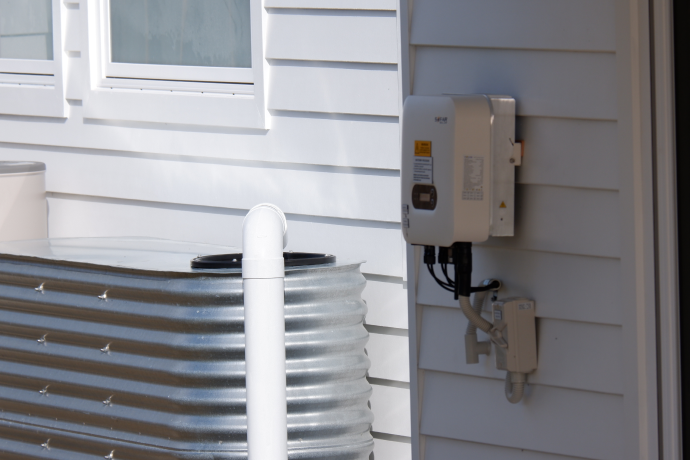
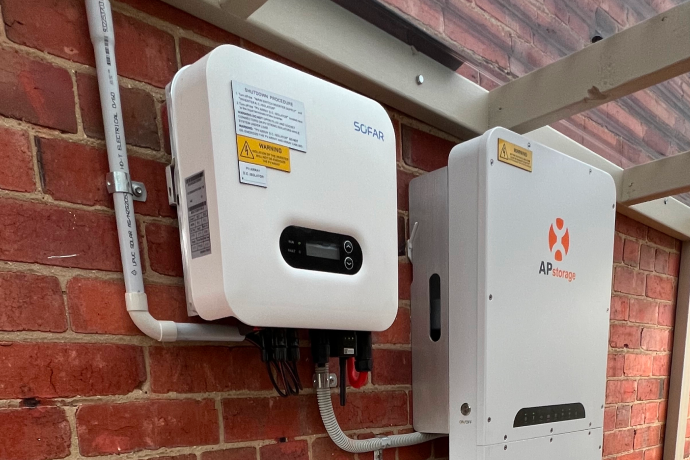
- Inverter display – Modern inverters typically have a digital display that presents data on your panel’s performance and energy production. This will be a helpful tool for checking your solar panel output remotely.
How to Check Solar Panel Output Manually
For homeowners who prefer to conduct a manual check, here is a step-by-step guide on how to test your solar panels using a multimeter:
- Step 1: Turn off solar panels – When dealing with electrical equipment, it’s important that your first step is always to completely disconnect your solar panels from the rest of your system to prevent any electric shock.
- Step 2: Connect your multimeter – Make sure your multimeter is set to DC volts, and then connect its red probe to the positive terminal of your solar panel. Then take your multimeter’s black probe and connect it to the negative terminal.
- Step 3: Place your panels in direct sunlight and take note of the voltage – Position your panels within direct sunlight so you can get an accurate reading of peak performance. This should give you a voltage reading that’s displayed on your multimeter, confirming your panels are generating electricity.
How to Check Solar Panel Output Remotely
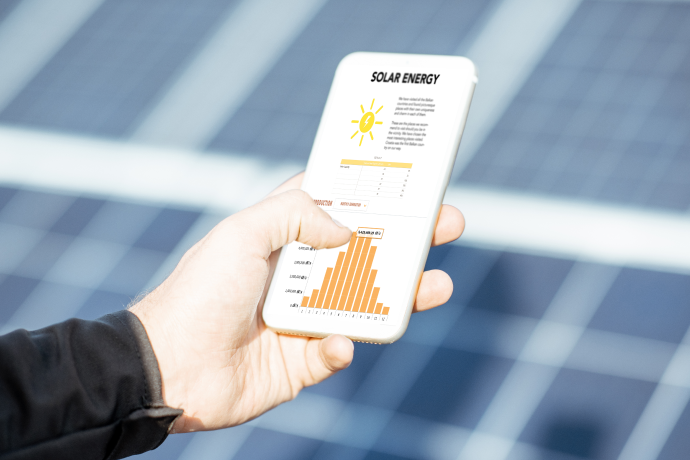
With modern technology, there are also ways to check your output remotely. This is one of the quickest and easiest ways to determine whether your panels are still working at an optimal level.
Many modern systems already come with an in-built solar panel monitoring system. This is typically connected to an online interface or smartphone app that provides real-time data on your system’s energy production. It can also provide historical data on your panel’s, to help keep track of any dips that signal a potential issue.
You may also check your performance through your inverter’s built-in display, which shows the current power output of your panels. Your inverter may also display an error code, which could signal a possible problem with your solar system.
Not all inverters can measure panel voltage, so it’s best to check with your solar installer about whether your system permits monitoring of panel‐voltage data or whether a separate monitoring system will be required.
Factors Affecting Solar Panel Output
Several contributing factors can affect how much energy your solar panels produce. These typically include the following:
- Panel Efficiency – Different panel types have different efficiency levels, typically ranging from 15% to 22%, which is the percentage of sunlight that is converted into electricity. Therefore, panels with a higher efficiency percentage can produce more electricity.
- Sunlight – The availability of sunlight is one of the biggest factors affecting your daily panel output. To operate at full capacity, your panels need as much direct sunlight as possible, with cloudy days naturally reducing your system’s output. Studies have found that heavy clouds can reduce your overall output by 50%. The less sunlight your panels receive, the lower the amount of energy they can produce, which may be a reason why you are detecting a lower panel output.
- Panel Angle and Direction – How your panels are positioned on your roof can influence the amount of sunlight that’s received. For example, in Australia, because the sun’s positioning is predominantly north, your panels should be positioned to face north to receive the most sunlight. Angle is also just as important, ensuring as much sunlight as possible strikes your panel’s surface. For Tasmanians, a 43° tilt is considered optimal. Double-check that your panels are installed to capture as much sunlight as possible, as this may affect your panel’s output.
- Cracks or Damage – Damage to your panels can be incredibly detrimental to their output levels. For instance, your panels can sustain cracks, such as during transport or due to a direct impact from objects like hail or a falling tree branch. These cracks can break the grid lines between your solar cells that transport electricity, reducing your panel’s ability to deliver as much energy as possible.
- Shading / Dirt and Debris – Anything that blocks out sunlight from reaching your panels can negatively affect their performance levels. Particularly when your panels are on the roof, they can be vulnerable to direct shading from nearby trees, buildings or other obstructions. Try your best to manage these obstructions with your solar installer during installation. They can also gather dirt and debris, which, once it builds up, can cause your panels to be less productive. To maintain optimal performance levels, ensure your panels are regularly cleaned.
How to Maximise Your Solar Panel Output
To make the most of your investment, it’s important to maximise the energy production of your solar panels. This can be achieved by considering the following tips:
- Regular Cleaning – To remove as much dirt and debris as possible, make sure you clean your panels at least once or twice a year. Make sure you use water and a mild detergent, avoiding harsh chemicals and bleaches that may damage your panel’s outer surface. Ensure that you stay on the ground and away from the roof. We recommend remaining on the ground, because the roof can get dangerous, particularly when using water to clean. If your hose doesn’t wash away all the dirt, please reach out to your local solar professional.
- Remove shading where possible – If part of your panels are impacted by shading, you should attempt to either reposition your panels or remove the shading where possible. For instance, if trees are casting shade, then try to regularly trim or even cut them down. If buildings are casting a shadow on parts of your panels, then consider repositioning them so they are no longer impacted.
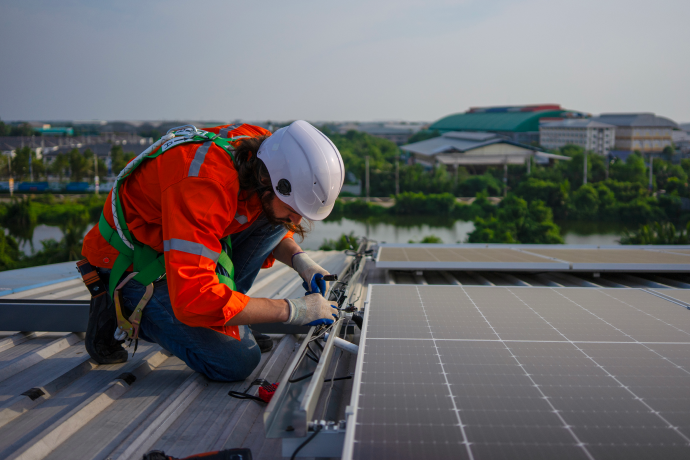
- Professional inspections – You must organise for a professional to physically inspect your panels at least once a year. While regular DIY checks can pinpoint shading or dirty panels, some issues are not immediately visible to the naked eye. For instance, your panels may have a small crack that’s not visible from ground level. Solar professionals are trained with all the tools and experience to pinpoint any issues and to double-check that your panels are working as intended.
- Choose the Right Solar Panel System – Make sure you choose high-quality solar panels from a reputable brand. By choosing these panels, you are investing in more robust materials that are better designed to handle different weather conditions for a longer lifespan. All solar panels will eventually degrade over time, but by choosing a high-quality solar panel with superior longevity, you can maximise the amount of energy they generate over their lifetime.
- Investigate Battery Storage – You may consider adding a battery storage device in conjunction with your solar panels. They are designed to allow you to store any excess electricity generated by your panels during the day, for use during periods of minimal sunlight and low energy production. This is a great way to maximise all of your solar panels’ available energy.
By regularly checking your solar panel output, you can ensure they continue producing as much energy as possible. You can record your system output by using a multimeter or a digital monitoring system linked to your panels. For any further information or assistance with checking your solar panels, please contact your local experts at TSS.

 1300 655 808