

To get the most out of the energy your solar panels generate, consider installing a solar battery, which can keep your home appliances running even when there’s no sunlight. However, with so many different options available, it can be difficult to determine which battery is right for your home.
Comparing solar batteries is important because it helps you choose a storage system that suits your energy needs and offers the best return on investment. When reviewing different options, we recommend comparing factors such as price, lifespan, and energy efficiency. You can also assess batteries by their type and brand to determine which option is best. This article breaks down why comparing solar batteries matters and outlines the key factors to consider when choosing the right one.
Why Compare Solar Batteries?
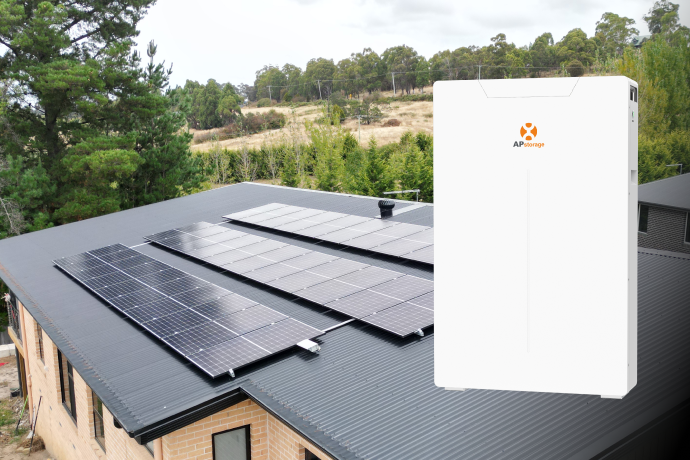
Solar batteries are a sizable financial investment that can help improve your savings, and keep your home appliances running, even when there’s no sunlight. To ensure you choose the right solar battery, it’s important to compare them. This helps you understand which solar battery is the best fit for your home, and allows you to maximise your energy use and improve your return on investment. The main reasons to compare solar batteries are:
- Long term savings – The right solar battery will allow you to net a significant return on your investment (ROI). Comparing the upfront cost, energy efficiency, and lifespan of solar batteries can help you pay off your investment quicker.
- Optimise financial value – The total cost of solar batteries will vary depending upon their manufacturer and type. By comparing different options you can ensure the battery you select is the best financial decision for you that matches your budget.
- Maximise energy efficiency – Compare the efficiency of different solar battery types and models to find a device that reduces the amount of energy lost through charging and discharging.
- Safety and reliability – When you buy a battery, you’ll want it to last as long as possible. Different batteries have different safety features and lifespans. By researching and comparing a manufacturer’s reputation, as well as the battery’s warranty and chemistry, you can ensure you choose a safe and reliable product.
Solar Battery Comparison
When comparing solar batteries, we recommend considering a variety of factors that will impact how suitable they will be for your home. These factors typically include the following:
- Brand – There are over 100 brands certified by the Clean Energy Council within Australia. It’s important that you compare different brands, for quality, performance, price and reputation.
- Energy efficiency – You can compare different battery efficiency levels by looking at their round-trip efficiency. This figure is conveyed as a percentage that is recovered after charging and discharging. The higher the efficiency percentage, the less solar energy is wasted.
- Lifespan – You will ideally want a solar battery that can last as long as possible. Often this is measured in years, but for solar batteries this can also be presented by the total number of charge / discharge cycles the battery can perform over its lifetime. Different battery models and types rate their lifespan differently, so it’s important to compare them carefully.
- Power output – This refers to how much power your battery can deliver, typically measured in kilowatts. Consider a battery’s maximum/peak power, which is the highest amount it can deliver at any given moment, and determines the amount of appliances that can run simultaneously. A higher kW solar battery means it can discharge power at a faster rate, and deliver more power to your home at one time.
- Price – An obvious point of comparison for many buyers is price. This will be vital to compare, as purchasing a battery that is too expensive may negatively impact your return on investment (ROI). On the other hand, investing in a lower-priced battery may be risky due to the likelihood of poorer construction and a shorter lifespan.
- Depth of Discharge (DoD) – Depth of Discharge (DoD) refers to how much energy you’ve drawn from your battery. This is usually expressed as a percentage of its full capacity. For example, if you have a battery with a total capacity of 10 kWh, and you’ve used 3 kWh, then your DoD is 30%. This is important to compare, because it helps determine how much of the battery can be used without significantly shortening its lifespan.
Comparing Types of Solar Batteries
Let’s start by comparing the major solar battery types. The four most common battery types you will likely encounter are:
- Lithium-ion – The most popular type of residential battery, they store energy by incorporating the movement of lithium-ion batteries. These are a great option because of their strong performance levels and their ability to store a large amount of energy within a limited space.
- Lead acid – Once the go-to choice for solar storage, lead-acid technology has been around since the 19th century, and uses lead electrodes and sulfuric acid to store energy. These batteries are increasingly rare and outdated today. Although they can hold a large amount of power, lead-acid batteries are heavy and can be slow to charge.
- Nickel cadmium – An incredibly durable battery that can work effectively through extreme temperatures. Although, they are not as popular as lithium-ion batteries, primarily because of their inability to hold a large amount of energy for their size, in addition to their high toxicity.
- Flow battery – The newest addition to the industry, flow batteries operate using a water electrolyte that flows between the two chambers in the battery. They are growing in popularity due to their impressive lifespan, although their high cost is a significant drawback.
To help you accurately compare these battery types, we have compiled the compiled the following table:
| Battery Type | Average Price (for 10 kWh battery) | Lifespan | DoD | Energy Efficiency |
| Lithium-ion | $9,000 – $15,000 approximate | 10-15 years / 4,000–6,000 cycles | 80-90% | 90-95% |
| Lead acid | Costs difficult to determine due to lack of modern systems – lower than lithium-ion | 3-5 years / 500 to 1,000 cycles | 50% | 70-85% |
| Nickel cadmium | Costs difficult to determine – not commonly used for residential solar | 3-5 years / 500 to 1000 cycles | 90% | 70-85% |
| Flow Battery | $9,000 – $14,000 approximate | 15-25 years / 10,000+ cycles | 100% | 70-85% |
Comparing Solar Battery Brands
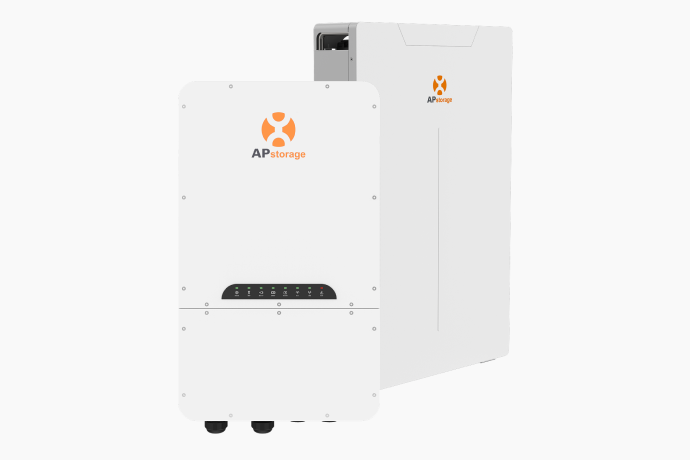
The top solar battery brands have been chosen based on performance, warranty, efficiency and manufacturing. While there are a variety of brands to choose from, within Australia the top rated solar batteries are:
- APsystems – Under their APstorage branch, APsystems’ solar batteries offer strong performance, with the brand’s impressive track record in inverters helping deliver a fully integrated solar and storage solution. Having been recently crowned the world’s number one most bankable solar inverter manufacturer, APsystems have cemented their reputation as one of the leading providers of solar technology.
- Enphase – Enphase is an established brand within the Australian solar industry. Their Enphase 5P battery offers reliability, strong performance and an impressive warranty of 15 years. Their focus on durability and thermal stability in particular, make them one of the safest options.
- SigEnergy – A newer brand in the solar battery market, Sigeneergy was introduced to Australia in 2023, but has quickly built a reputation for their advanced technology and consistent performance.
- Tesla – Arguably the most well-known battery manufacturer. Tesla and their Powerwall line of batteries are go-to choice for homeowners due to their solid round-trip efficiency and polished design.
- Fox-ESS – One of the global leaders in the development of battery storage, Fox-ESS are made from Lithium-Iron Phosphate (LiFePO4) cells, and offer considerable performance at an affordable price point.
| Brand | Warranty | Energy Efficiency | Brand Reputation | Integrated Monitoring System (PCS) | Advanced Inverter-Battery Ecosystem |
| APbattery | 10 years | 97% | Excellent | Yes | Yes |
| Enphase IQ Battery 5P | 15 years | 96% | Excellent | Yes | No |
| SigenStor | 10 years | 97-98% | Very Good | Yes | No |
| Tesla Powerwall 3 | 10 years | 97% | Excellent | Yes | No |
| Fox ESS EQ4800 | 10 years | 95% | Very Good | No | No |
How to Choose the Right Solar Battery
When selecting a solar battery, it’s important to choose a device that suits your needs. The following are some of the main factors to consider before adding a battery to your solar system.:
Capacity
Finding the right battery capacity will be key to ensuring you maintain strong performance levels. Your capacity refers to how much energy the battery can store, measured in kilowatt-hours (kWh). This is important to get right, because if you buy a battery that’s too small, it may not have the necessary capacity to cover your night-time usage.
To determine the right battery capacity, you need to consider the size of your solar system. For example, if you have a 6.6 kW solar system, you will typically need a battery with a capacity of approximately 10 kWh. Although this could easily be more, especially if you are thinking about going completely off-grid. If you’re unsure about the right size for you, we recommend consulting with your local solar installer or contacting our team at Tasmanian Safer Solar.
Warranty
Prior to making your purchase, it’s vital to ensure the battery comes with a substantial warranty period. A warranty provides assurance from the manufacturer that the battery will perform as expected. Most solar batteries typically include a warranty of around 10 years.
Your warranty is directly linked to your battery’s lifespan, usually expressed as the total number of charge–discharge cycles the battery can perform before it reaches the end of its life. It’s important that you understand all warranty terms and what is covered. For example, some warranties may be voided if a specified number of charge–discharge cycles is exceeded.
Budget
Solar batteries can be an expensive investment, so it’s important you select a device that matches your budget. Costs for solar batteries can vary significantly, but generally the higher the capacity, the more you should expect to pay. The following is a table that displays average battery installation prices.
| Battery Capacity | Cost | Battery Cost per kilowatt-hour (kWh) |
| 1-5 kWh | $1,380 – $6,900 | ~$1,380 |
| 6-10 kWh | $6,780 – $11,300 | ~$1,130 |
| 11-15 kWh | $11,550 – $15,750 | ~$1,050 |
| 16-20 kWh | $16,000 – $20,000 | ~$1,000 |
*Includes the installation of the battery only. No rebates or incentives are added.
Source: https://tasmaniasafersolar.au/learn-more/solar-battery-cost/
Federal and state rebates can help make the purchase of a battery much more affordable. The Australian-wide Federal Battery Rebate can reduce the upfront cost of a home battery system by approximately 30%. Tasmanians can also access interest-free payment packages through TSS (Tasmanian Safer Solar), with repayment periods of between three and five years to help fund the purchase of a new battery system. Contact the experts at TSS for more information on the rebates available to you.
Smart Features and Monitoring
Many solar batteries come fitted with smart features that can enhance your system’s performance. These include real-time remote monitoring, which allows you to access data on battery performance and charge levels. Modern batteries can also perform time-of-use automation, enabling them to automatically discharge during peak periods when electricity is most expensive, helping to maximise your savings. Discuss with your local installer, or the team at Tasmanian Safer Solar (TSS), for more information on the smart features included within your battery.
Consider Your Solar System Compatibility
If you already have a solar system installed, it’s valuable to check whether your inverter is battery-ready. For most homeowners, batteries are usually added with an AC-coupled system, which is where your installer adds a second inverter for your battery that connects to your home’s AC supply. This method is usually preferred, because of its simple installation that leaves the existing system untouched.
You may also consider a DC-coupled system, in which your existing solar inverter is replaced with a hybrid inverter, that manages both your solar panels and battery. Although this may provide a more efficient system with only a single inverter, the installation will be more complex and likely more costly. The best way to determine your solar systems’ battery compatibility is by reaching out to the team at TSS who can assess your current setup and recommend the best path forward.
There is no “best” solar battery, but by comparing the price, energy efficiency and lifespan of different options, you can find the best storage device for your home. For more information on solar batteries, please reach out to the experts at TSS for more information.

 1300 655 808