


When exploring solar batteries, you will frequently encounter terms such as kWh, SoC, and DoD, which can make it difficult to understand their specific meanings. Depth of Discharge (DoD) is one of the most important concepts to consider for anyone looking to maximise the lifespan of their battery. It refers to the percentage of energy you’ve used from your battery. This is important for maximising your battery’s lifespan because different batteries have varying DoD limits that tell you how much energy you can safely use before it needs to be recharged. Along with regular maintenance and proper storage, navigating the DoD can ensure you get the most out of your storage system.
What is the Depth of Discharge?

Depth of Discharge (DoD) refers to how much energy you’ve drawn from your battery. This is usually expressed as a percentage of its full capacity. For example, if you have a battery with a total capacity of 10 kWh, and you’ve used 3 kWh, then your DoD is 30%.
Depth of Discharge vs. State of Charge
Depth of discharge (DoD) can often be confused with the state of charge (SoC). While they are related terms, they are not the same thing.
As previously mentioned, your DoD is the measurement of how much energy a battery has used, expressed as a percentage. While the SoC measures the opposite. It indicates a percentage of how much your battery is charged.
Let’s use an example to demonstrate. You have a 10 kWh battery, and you’ve used 7 kWh, so only 3 kWh is remaining. This means your battery’s SoC is 30%, with 3 kWh of energy left to use, while the DoD sits at 70%. Understanding both of these measurements will be crucial to avoiding any overcharging or deep-discharging that affects battery lifespan.
Why Is Depth of Discharge Important?
DoD is an important concept for homeowners to understand because it helps determine how much of the battery can be used regularly without significantly shortening its lifespan..
Your battery will be rated for a specific number of charge-discharge cycles, which is the metric that determines its lifespan. This can typically range from 3000 to 5000 cycles for a modern lithium-ion battery with a lifespan of 10 to 15 years. Solar batteries, like other electronic devices, will naturally degrade over time. Every time you fully or partially charge your battery, this affects its number of charge cycles.
Your DoD and charge cycle are directly intertwined. Regularly discharging a battery at a higher DoD percentage can place more strain on your battery, which can increase wear and tear. Therefore, if you fully discharge your battery and use 100% of its storage, you are reducing the number of cycles it can deliver, which reduces its lifespan.
How the Depth of Discharge Affects Various Types of Batteries?
Each battery type has a different tolerance for DoD. This is determined by their unique chemistry and design, with each having an optimal DoD range that maximises their performance and longevity. Batteries with higher recommended DoD can maintain their efficiency for longer, and may offer better value.
Lithium-ion batteries – 80-90%
The most commonly used battery type for modern energy storage. They are popular because of their high energy density and long lifespan. They also have an impressive DoD of between 80-90%. This means that you can use approximately 80% of your battery’s total capacity before it’s time to start recharging.
Lead-acid batteries – 50-60%
Traditional lead-acid batteries are increasingly rare and outdated for modern homes. Although they can hold a lot of energy, they have a short lifespan and are much more affected by frequent deep discharges than lithium-ion batteries. They have a lower recommended DoD of 50-60%, with discharges beyond this percentage drastically reducing their lifespan.
Lithium-iron-phosphate (LiFePO4) – 90-100%
A modern version of the lithium-ion battery, lithium-iron-phosphate has quickly become one of the leaders in battery technology due to its longer lifespan and efficiency. It can also be discharged at close to 100%, with a DoD of between 90-100%. Although manufacturers still recommend that you don’t completely discharge to maintain their long lifespan.
What Depth of Discharge Should I Be Looking For?
We recommend choosing a battery with a minimum DoD of at least 80%. This means you can get more out of your battery’s capacity before you need to recharge to avoid eroding its lifespan. If you have a battery with a lower DoD, then you likely need more batteries to satisfy your energy needs.
Although a higher DoD does not mean you should always use your battery to that level.
Particularly for a long-term storage system, you must take the proper steps to ensure your batteries’ longevity is maintained. Even if you have a Lithium-iron-phosphate battery that can be discharged at 90%, we recommend staying well below that manufacturer limit to prevent any damage.
You should also consider how much energy you want to be able to access from your battery. This is an important consideration when it comes time to choose a battery with a DoD of at least 80%. For example, you may be looking for a battery that can give you 10 kWh of available energy. Although if you are aiming for a DoD of 80%, this means your battery must have a total capacity of 12 kWh to meet your goals.
Tips for Maximising Solar Battery Lifespan
By understanding DoD, you can help maximise the value of your solar battery. This can help you enjoy all the benefits a solar battery has to offer. The following are some of our tips for extending their lifespan:
- Stay within the recommended DoD – As we’ve previously mentioned, the lifespan of your battery is directly tied to its DoD. Therefore, you must keep your battery capacity within this range during daily operation. This means if your battery has an optimal DoD of 80%, it should not go below 20% unless in an emergency, like a blackout. Make sure you check your battery’s manufacturer’s optimal DoD specifications, and stay within this recommendation.
- Charge your battery correctly – Try to avoid routinely charging your solar battery up to 100%. In the same way that discharging below the recommended DoD can stress your battery, overcharging may also cause degradation to accelerate. For lithium-ion batteries, keeping them between an SoC of 20% and 80% can avoid these harmful extremes.
- Avoid Extreme Temperatures – Try to position your battery so it can maintain a stable temperature. When it’s exposed to high temperatures, above 45°C, this can accelerate degradation and increase the risk of malfunction. Low temperature can also slow down the chemical reactions in your battery, making it harder for your battery to perform at its best. Keeping your battery as close to room temperature as possible can help prolong its lifespan, ideally in a cool, dry location away from any direct sunlight and fully protected from the elements.
- Regular maintenance – Like all the other parts of your solar system, if you want to get the maximum out of life, you’ll need to organise regular maintenance checks. This allows a solar professional to thoroughly check all parts of your battery and troubleshoot any issues before they get worse. Reach out to the experts at Tasmanian Safer Solar (TSS), who can organise one of your solar professionals to check your system.
How to Calculate the Depth of Discharge?
To find your batteries’ DoD, you can follow these simple calculations below:
- Step 1: Find your battery’s total capacity – You will need to first determine the capacity of your battery. This is usually measured in ampere-hours (Ah), or kilowatt-hours (kWh). For instance, 10 kWh is a popular battery capacity for homeowners.
- Step 2: Estimate the amount of energy that has been used – You will now need to estimate the amount of energy (in kWh) that your battery has used. Modern installations may be fitted with either a digital display or you can purchase a shunt-based battery monitor, which can be used to report how full your battery is. Let’s say for these calculations, your battery has 7 kWh of usable energy remaining.
- Step 3: Make the calculations – Now that you have both the total capacity and the amount of energy used, simply use our formula below:
- Depth of discharge = (used energy/initial capacity) x 100
- Using the examples above:
- Used energy: 3 kWh
- Initial capacity: 10 kWh
- Depth of discharge = (3/10) x 100 = 30
- This makes the current depth of discharge here at 30%, meaning 30% of the battery’s capacity has been used, while 70% remains for later use. This can be a valuable calculation to make whenever you use your solar battery. For example, if you are using a lithium-ion battery, which is typically rated for approximately 80% DoD, making these calculations can prevent you from exceeding 80% and putting strain on its lifespan.
DoD Savings Calculator
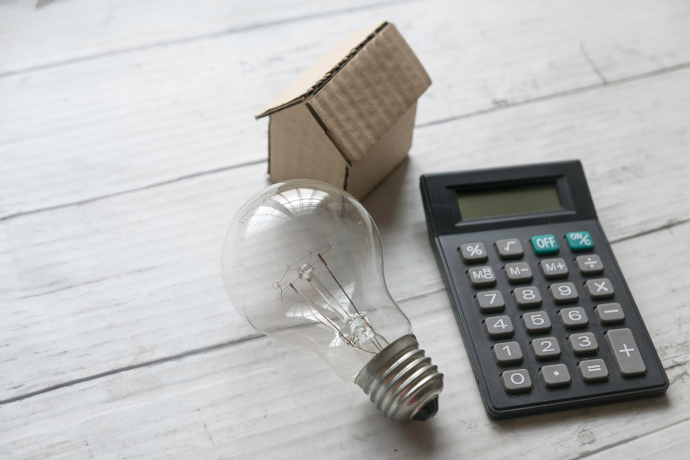
Your battery’s depth of discharge also has an often overlooked impact on the savings it can deliver over time. This is because a higher DoD allows more of a battery’s capacity to be used each cycle, which can increase the amount of energy a household can store each day.
To demonstrate these savings, let’s use a 30 kWh battery as an example. Assuming it operates at one full cycle per day, over 10 years, with electricity valued at $0.35/kWh.
Using this 30 kWh battery, let’s compare an 80% DoD and 90% DoD:
- At 80% DoD, the usable capacity is 24 kWh
- At 90% DoD, the usable capacity increases to 27 kWh
This leads to a difference of 3 kWh of usable energy per day. If the value of electricity is $0.35, this equates to approximately $1.05 per day or $380 per year. To help you understand how DoD could affect savings, please refer to the following table:
| DoD | Usable Capacity | 1-Year Savings | 10-Year Savings |
| 80% | 24 kWh | – | – |
| 90% | 27 kWh | $383 | $3,835 |
It’s important to note that these calculations assume the same energy efficiency in both examples. Additionally, not every household will use a full battery cycle every day, and actual usage will vary depending on your individual circumstances.
Although navigating DoD can be a complex process, understanding its role in your solar batteries will be key to maximising their lifespan. Batteries that are regularly discharged beyond their own recommended DoD percentage are at risk of suffering from greater degradation and a shorter lifespan. By choosing the right battery, with a suitable DoD rating for your household, you can make the most of your new investment. For more information on DoD and solar batteries, please reach out to the experts at TSS.

 1300 655 808