

Understanding the importance of solar system size and panel wattage is key to the performance of your new installation. There’s a lot of technical information out there, which is why we’ve created this guide to help you make sense of it. Solar system size (measured in kilowatts, or kW) refers to the total power capacity of all your solar panels, while wattage refers to the output of each individual panel. Solar system size can also refer to the physical dimensions of your panels, which will also be explored in our guide.
Finding the perfect size solar system is vital because it helps you maximize your energy production and savings without sacrificing your budget. The right size depends on a number of factors, including your energy consumption, sunlight availability and available roof space.
What Is Meant By Solar System Size?
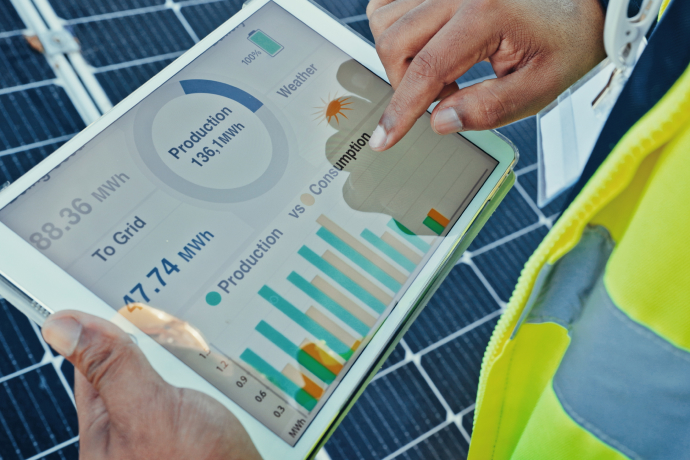
Solar system size refers to the total power capacity of your solar panels in your system. In simple terms, this is how much electricity your system can produce in ideal conditions at peak performance. The size of your entire solar system is measured in kilowatts (kW), which is calculated by adding the individual power ratings of each solar panel, measured in watts (W). For example, a solar system with 10 panels, rated at 350 W, has a total solar system of 3,500 W or 3.5 kW.
The size of a solar system is important because it allows you to determine how much energy your panels will generate. If you install a system that is the incorrect size, this can impact how much you save on electricity bills and your return on investment. For example, if your system is too small, you won’t be able to generate enough power for your home, meaning you’ll need to purchase more electricity from the grid. A perfectly sized system will align perfectly with your household consumption, without overspending.
Solar Panel Dimensions, Weight & Wattage
Solar Panel Size Dimensions
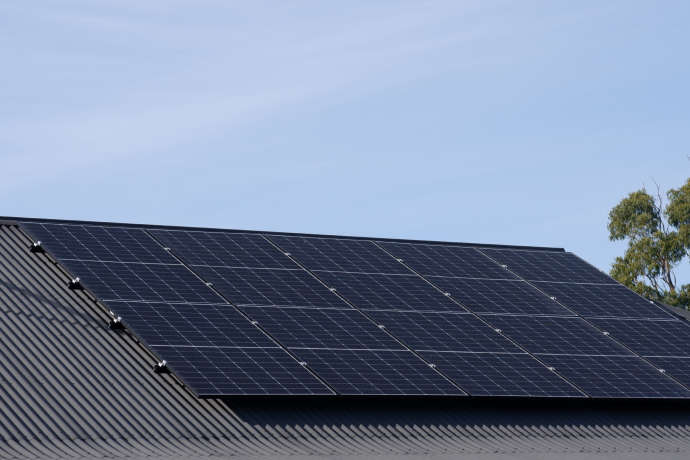
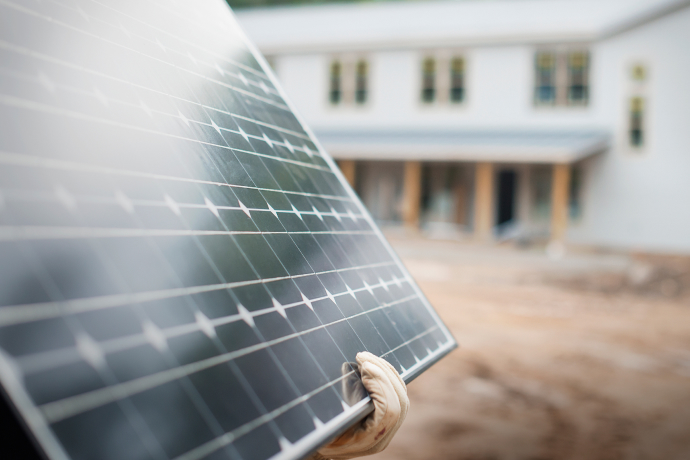
Although solar panel size can refer to its power capacity, it can also refer to its physical size. Solar panels are composed of multiple solar cells, which are the individual squares visible on the board. Cells are responsible for converting sunlight into electricity. With the more cells a solar panel has, the more energy it can create, and the larger it is.
Standard household solar panels contain 60 solar cells, at standard width and length dimensions of 1.7 m x 1.0 m. The thickness of your solar panel typically ranges from 30mm to 40mm. Solar panels can also come with 72 cells, which are mainly used for commercial applications, with dimensions of 2.1 m x 1.1 m.
Solar Panel Wattage
The wattage (W) of your solar panels is the measure of how much electricity they can generate. Depending on how many solar cells you have and the dimensions of your solar panels, this affects your panel’s wattage. The following table presents how solar panel dimensions directly affect your typical wattage.
| Cell Count | Dimensions | Wattage (W) | Application |
| 60 | 1.7m x 1m | 350W – 400W | Household Installation |
| 72 | 2m x 1.1m | 415W – 550W | Commercial / Business |
Weight
Vital when discussing solar system size is to consider the weight of your panels. Important, because it helps you understand whether your roof can support the load of an entire system. Typically, you should expect solar panels to weigh between 18 and 20 kg. With an average solar system size of 6.6 kW using approximately 17-20 panels, the total weight of your system could be over 400 kg. Luckily, the vast majority of roofs in Australia will be able to handle this weight. Your structural integrity should only be a concern if your roof is considerably older or if there are signs of sagging or damage around where your panels are planned to be installed. Your solar installer can support you through this process, helping to ensure your roof can fully handle the demands of solar panels.
Key Factors for Determining Solar System Size
When finding the perfect solar system for you, consider the following factors:
- Electricity consumption
The more energy you consume, the more panels you’ll need. Check your electricity bills for the past year to calculate your monthly usage in kilowatt-hours (kWh). This number provides a baseline for your solar installer to calculate the perfect solar system size for you. In Australia, the average household tends to consume between 600 and 900 kWh a month. Some homeowners may want their solar system to cover all this monthly usage. While others prefer to cover just a portion. Consult with your solar installer to find the right size to match your monthly consumption figures. - Consider future usage
When determining your usage, you should also consider how your habits may change in the future. For example, you might be planning to add an electric vehicle or install a new air conditioning system. Both of these additions may significantly increase your household consumption. Or you could be planning to renovate your home with new electronic appliances. Accounting for these future needs helps you install a solar system size that remains effective and cost-efficient going forward. - Consider the environment and sun exposure
When installing any solar system, it’s important to keep your local climate in mind. Because solar systems rely on sunlight to generate power, homes in sunnier regions can install fewer solar panels to cover their electricity needs. Conversely, if you are in a region that’s more cloudy, you may need to install a larger system to account for the lack of sunlight. Other environmental factors, such as frequent rain, snow or smog, can also reduce your system’s energy production. Hobart and Launceston have the least amount of sunlight for any major cities in Australia, making it vital to nail the right system size. Our team at TSS can help account for these losses, with local installers that are prepared to handle the unique Tasmanian climate. - Consider roof orientation and angle
Not every roof is the same, and some will be better suited for solar production. Roofs that support solar panels facing north will be best, because they receive the most sunlight in the southern hemisphere. Panels that face east or west can still generate power, but may need a larger system to compensate for the lower sunlight exposure. Your roof angle is also an important factor, because it can maximise how much sunlight strikes your panels. Roofs that allow panels to be tilted at between 15 and 35 degrees work the best, while flat roofs may need brackets to reach the optimal angle. - Consider available roof space
The size of your solar system can be significantly limited if you don’t have enough available roof space. Larger systems require more room, with a 6.6 kW system needing around 30 square metres of roof space. Obstructions such as vents, chimneys or skylights can all reduce the amount of solar panels you can install. Furthermore, shade is also a big factor, as parts of your roof may be hindered by a nearby tree or building casting shade, which can reduce your solar output. Choosing high-efficiency panels, such as monocrystalline, is a great solution. These panels are smaller than other panels, but produce the same output, helping you maximise the space available. - Consider budget
The bigger the solar system, the more money you’ll need to pay. This is because when you buy a larger system, you’re paying for more panels, with a bigger installation and inverter size. The average cost for a 6.6 kW system sits between $5,500 – $9,500. Larger systems, at 10 kW for example, can set you back at around $8,500 – $13,500. Luckily, Tasmanians have access to solar rebates that can reduce these costs significantly. Through the Small-scale Technology Certificate program, eligible Tasmanians can receive STCs valued at $2,080 for a standard 6.6 kW system (approximate, subject to change). This can help to reduce your overall costs by approximately 30%. Because of these costs, it can seem attractive to purchase a smaller system. However, larger systems mean you can substitute more of your expensive electricity bills with renewable energy, potentially saving you big in the long run.
How To Calculate What Size Solar System To Install
Once you’ve assessed all the necessary factors for sizing, it’s time to crunch the numbers. Although your solar installer will typically handle these steps for you, this can be a great way to estimate how big your solar system will be in advance. Don’t worry, the steps for calculating solar system size are very simple.
- Find your annual kWh consumption
First things first, you’ll want to gather your exact kilowatt-hour (kWh) usage. This can be found on your electricity bill or by contacting your utility provider directly for information. Find your annual electricity usage, as this can account for any seasonal fluctuations through winter and summer. A typical number for Tasmanians could be around 9000 kWh per year. - Calculate your daily kWh consumption
Once you’ve found your yearly usage, we now want to find your daily average. You can calculate this by dividing your previous figure by 365. For example, 9000 kWh ÷ 365 = 24.7 kWh. - Find your Peak Sunlight Hours
Now you should look to find the average sun hours depending on your location. This is important because, depending on the amount of daylight, your system may need to be bigger or smaller. Within Tasmania, we have some of the lowest sunlight exposure in Australia. For example, Hobart has an average of 3.6-4.2 hours of sunlight per day. - Make the final calculations
Now to the final step. To complete your calculations, divide your average daily energy usage (kWh) by the amount of sunlight you receive per day. For example, 24.7 kWh ÷ 5.5 = 4.5 kW. This means, based on our calculations, you are looking at a system sized at approximately 4.5 kW. You can also multiply this number by 1,000 to determine the solar panel wattage you require. Making these calculations confirms that you need 4500 watts of solar panels.
Importantly, these calculations can provide you with a rough estimate. Your solar installer will be able to identify and explain the perfect size for you. They are experts in their field who can comprehend your personal energy usage, budget and plans. They can also visit your home, and make note of your roof’s size, condition and any potential shading. Using a solar system size calculator can be another great way to find the right-sized solar system for your needs. These programs take into account factors such as your location, electricity consumption and even potential savings.
Solar system size and wattage are both vital to making a smarter energy and financial decision. Understanding both these metrics helps you find a system that produces enough power while also saving you money on power bills. When determining the right size, take into account your current and future energy consumption, the amount of sunlight you receive and your budget. Please contact the experts at Tasmanian Safer Solar (TSS), who can provide a professional assessment to help you find the perfect size system for your home.

 1300 655 808